What is a Bhutanese hot stone bath?
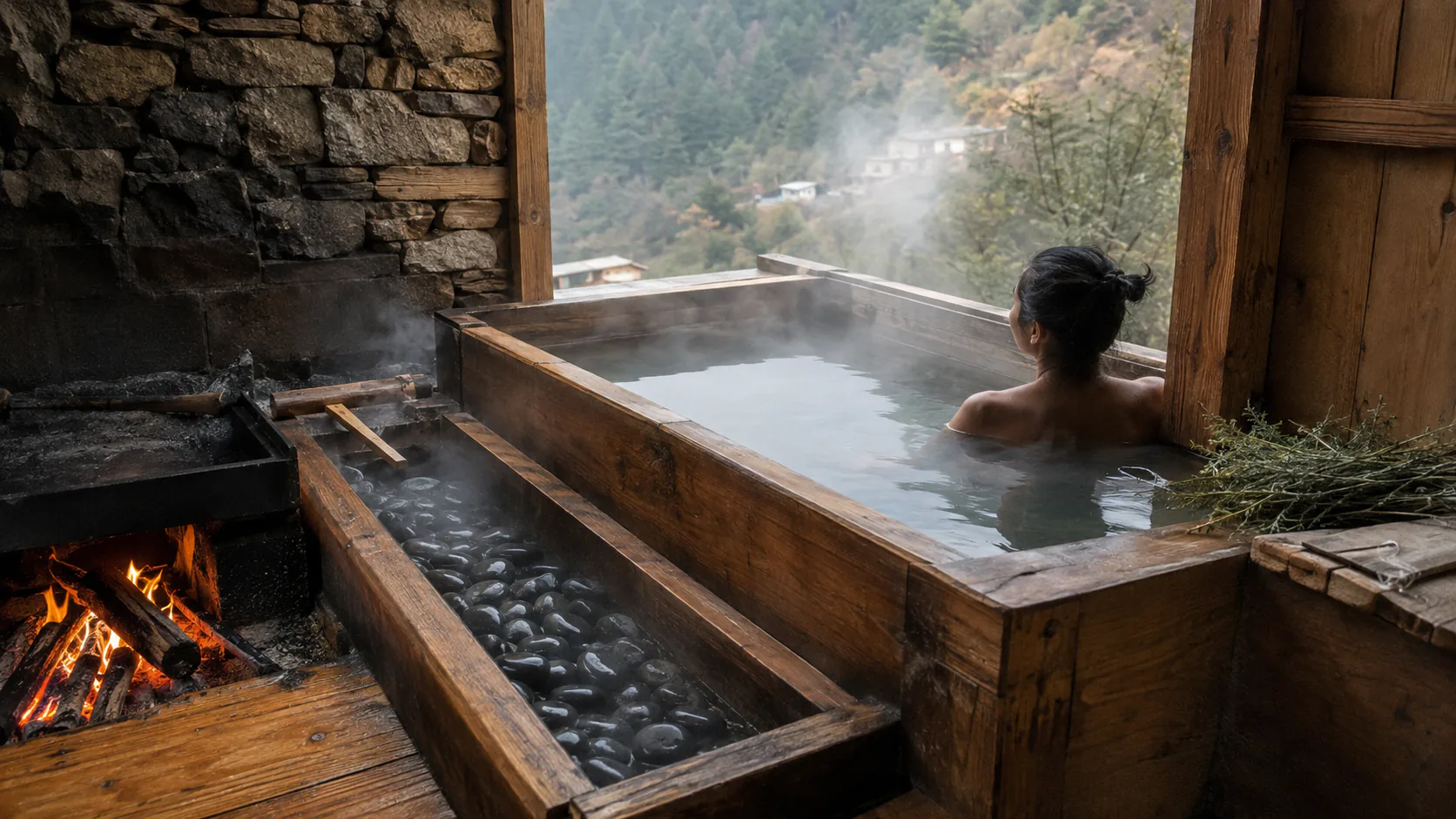
Often referred to as Dotsho, the experience traditionally uses fire-heated river stones to warm water in a wooden bath. The stones are kept safely separated from the bather while releasing heat into the water. Herbs may be added according to local practice and availability.
Methods differ between farmhouses, spas and wellness settings, so the exact bath design, ingredients and duration can vary.
A ritual for slowing down
The most immediate quality of a hot stone bath is warmth. A comfortably supervised bath may encourage relaxation, help tired muscles feel less tense temporarily and provide a calming transition after walking, travel or a full day of experiences.
These are general wellness effects rather than guaranteed medical benefits. Individual responses differ, and Dotsho should not be promoted as a cure or replacement for healthcare.
What guests can expect
- A privately prepared wooden bathing space
- Water temperature checked before and during the experience
- A period of quiet soaking, adjusted for comfort
- Optional herbs where appropriate
- Time afterward to hydrate and rest
The exact experience at a Himalayan Reset programme depends on the confirmed itinerary, venue facilities, practitioner availability and personal suitability.
Who should take additional care?
Guests who are pregnant, prone to fainting, sensitive to heat, taking medicines that affect blood pressure, or living with heart, circulation or other significant medical conditions should seek professional medical advice before using a hot bath. Guests should stop immediately if they feel dizzy, unwell or excessively hot.
Hot stone bathing within The Himalayan Reset
Where included, the experience forms one considered part of a wider Bhutan wellness journey that may also include gentle movement, meditation, nature immersion, restorative treatments, nourishing food and reflective practices.