
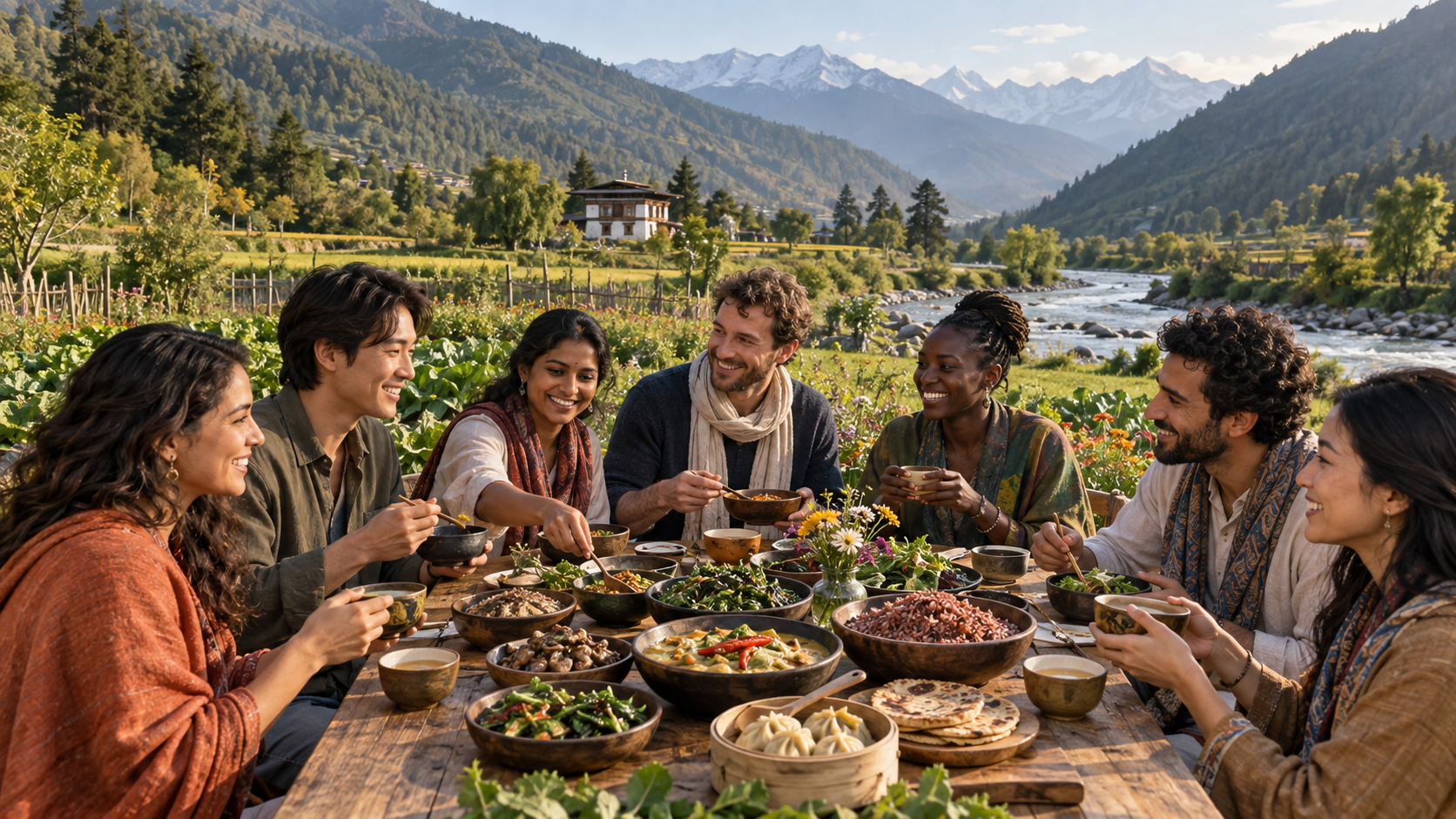
During a busy day, eating can become another task. Bhutan offers an opportunity to experience food differently: as a connection to hospitality, landscape and the people sharing the table.
What is mindful eating?
Mindful eating means bringing deliberate attention to the experience of eating. Guests may pause to notice colours and aromas, observe flavour and texture, eat without rushing and pay attention to natural feelings of hunger and satisfaction.
It does not require a complicated diet or rigid rules. Putting phones away, taking a quiet moment before eating and appreciating the people who grew and prepared the food can be enough to begin. It is an awareness practice—not a weight-loss programme, treatment or promise of a health outcome.
Bhutanese food and hospitality
Bhutan’s official tourism website describes hospitality and food as inseparable. Red rice, buckwheat, butter, cheese made from cow or yak milk and many varieties of chilli are among the ingredients found in Bhutanese cooking. Rural life also includes gathering wild greens, producing butter and sharing suja, or butter tea.
A Bhutanese meal is therefore more than a collection of dishes. Guests can learn where ingredients come from, how food is prepared and why certain flavours carry cultural importance.
Familiar ingredients in Bhutanese cuisine
One of Bhutan’s best-known dishes is ema datshi, traditionally prepared with chillies and cheese. Red rice is another familiar part of Bhutanese meals, while buckwheat, millet, dairy products, mushrooms and seasonal vegetables feature across different regions.
The Food and Agriculture Organization notes that Bhutanese cuisine commonly revolves around red rice, buckwheat and millet. Retreat menus can respectfully draw inspiration from these ingredients while considering dietary requirements, spice preferences and seasonal availability.
From farm and garden to the retreat table
Paro Valley’s fields, traditional houses and kitchen gardens help visitors see the relationship between landscape and food. A farm-to-table experience may include meeting growers, visiting a suitable garden, learning about seasonal produce and seeing how ingredients become part of a meal.
This does not imply that every ingredient is grown beside the resort. Season, availability, food safety and guests’ needs must guide responsible sourcing. The more important principle is transparency about what is local and how the menu has been designed.
Why the setting of a meal matters
A quiet dining space, thoughtful presentation and sufficient time can change the character of a meal. Eating while overlooking the valley or gathering after a morning activity allows food to feel connected to the day rather than interrupting it.
At The Himalayan Reset, meals may include screen-free periods, shared tables, clear ingredient information, vegetarian choices and consideration of disclosed dietary needs. Guests always remain free to eat according to their comfort and requirements.
Mindfulness without food rules
A mindful retreat should not create guilt around eating. Labelling every food as good or bad can make meals feel restrictive. A more balanced approach considers variety, adequacy, moderation and individual needs.
The World Health Organization explains that healthy diets can take many forms and should reflect cultural context, lifestyle and locally available foods. Guests may also have allergies, intolerances, religious requirements or medically advised diets. Retreat menus never replace personalised advice from an appropriately qualified professional.
What research says
Research into mindful eating is developing. Observational studies have found associations between mindful eating and diet quality or other wellbeing measures, but associations do not prove cause and effect. Researchers continue to call for intervention studies involving more diverse populations.
The responsible message is simple: mindful eating may support greater awareness, but it should not be promoted as a cure or guaranteed route to weight loss.
A mindful meal at The Happiness Retreat
A meal may begin with a brief introduction to its ingredients. Guests can observe the food before eating and enjoy the first few mouthfuls quietly, noticing flavour, aroma and texture. The meal then unfolds naturally through relaxed conversation without pressure to finish every item.
Afterwards, a gentle reflection can ask: Which flavour did you notice first? Did eating slowly change the experience? Which ingredient was unfamiliar? What could make meals at home feel less hurried?
Connecting nutrition with the Seven Pillars
Nutrition is one of the Seven Pillars of The Himalayan Reset, alongside Nature, Movement, Mind, Sleep, Silence and Purpose. Nature helps guests understand where food originates; Mind and Silence build attention; Purpose helps identify realistic habits to carry home.
Food thus becomes part of the wider Bhutan wellness retreat, rather than a restrictive programme. A screen-free table also connects naturally with our Digital Detox guide, while local hospitality reflects the deeper travel described in our Slow Travel article.
Taking the practice home
Choose one meal each day. Put the phone away, sit down, pause before the first mouthful, notice colour and aroma, eat slightly more slowly and check how hungry or satisfied you feel. A simple repeatable practice is more valuable than an ambitious routine that disappears after the retreat.
A responsible wellness note
The Himalayan Reset provides general wellness and lifestyle experiences. Retreat meals and mindful-eating activities do not diagnose, treat or prevent medical conditions and are not substitutes for individual medical or nutritional advice.
Sources and further reading
This original article was informed by Bhutan’s Department of Tourism, the Food and Agriculture Organization, the World Health Organization, and mindful-eating research indexed by PubMed.