
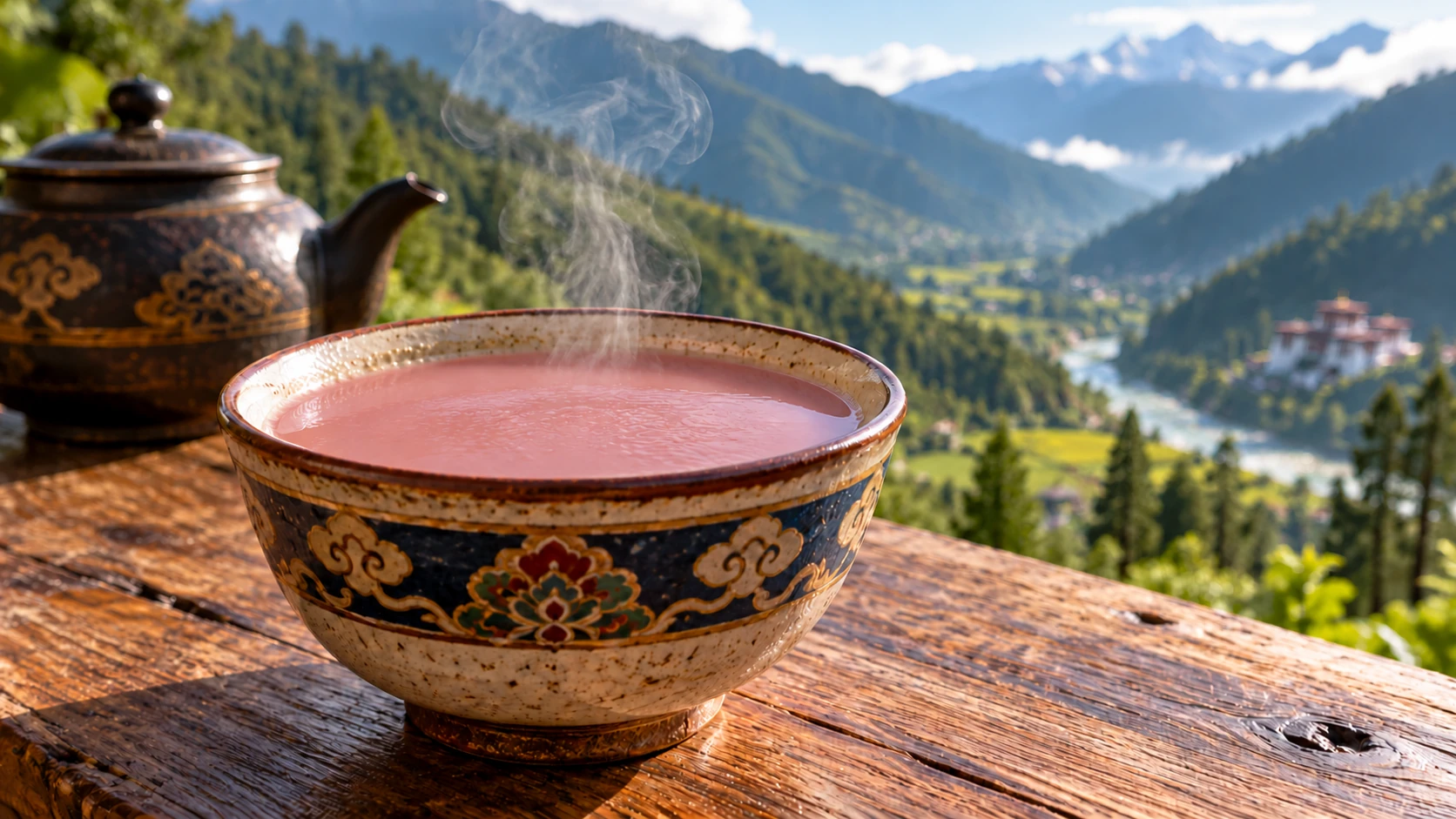
Some of the most memorable travel experiences are also the simplest. A warm cup held between both hands. A conversation allowed to unfold slowly. A few quiet minutes in which nobody is rushing towards the next activity.
In Bhutan, tea is woven into everyday hospitality. One distinctive example is suja, the country’s traditional butter tea. For guests on a wellness journey, an unhurried tea pause can offer an introduction to local life and an opportunity to experience attention without urgency.
What Is Bhutanese Butter Tea?
Suja is Bhutanese butter tea. Unlike the sweet milk tea familiar across much of South Asia, it is traditionally savoury. Preparation varies between homes and regions, but tea is generally combined with butter and salt to create a warm, rich drink.
That unfamiliarity can be part of the experience. Rather than immediately judging the flavour, guests can notice the warmth of the cup, the aroma, the savoury character, the texture and the setting in which it is served. This is mindful tasting in its simplest form: paying attention before reaching a conclusion.
Tea as Bhutanese Hospitality
Bhutan’s official tourism website describes hospitality and food as inseparable, from remote valleys to contemporary restaurants. It identifies butter, red rice, buckwheat, locally produced cheeses and chillies as recurring ingredients, and describes people talking over suja in rural communities.
Tea may be offered during a visit, conversation or pause in the day. Its importance lies not only in the drink but also in the gesture: someone has stopped to welcome another person.
Visitors should approach this tradition with openness. Suja belongs first to Bhutanese culture and daily life. A retreat may offer an opportunity to learn about it, while recognising that recipes and customs vary between households.
Why a Tea Pause Belongs in a Wellness Retreat
Modern routines encourage us to consume almost everything quickly. Coffee is carried into meetings, lunch is eaten while answering messages and tea is forgotten beside a laptop.
A mindful tea experience creates a defined period in which guests can stop multitasking. Put phones away, sit comfortably, learn about the ingredients, notice the aroma and take the first sip without conversation. Allow the flavour to register before continuing with relaxed conversation or silence.
The intention is awareness, hospitality and human connection. Butter tea is not presented as a treatment or a source of guaranteed health outcomes.
A Mindful Tea Moment in Paro
Paro brings together cultivated fields, traditional buildings, rivers and forested slopes. Bhutan’s tourism authority describes a country where living traditions and wilderness remain closely connected.
A tea pause might take place after a gentle activity, beside the river or indoors overlooking the landscape. Guests could be introduced to suja alongside another familiar tea option. Participation remains optional, with dietary requirements considered.
The intention is not to create a formal ceremony where none exists. It is to allow time to appreciate the tea, the setting and the welcome behind it. Specific tea experiences are subject to the confirmed programme and local arrangements.
From Automatic Consumption to Deliberate Attention
A guest tasting suja for the first time may immediately compare it with sweet chai, black tea or coffee. A slower approach invites curiosity:
- What were you expecting before the first sip?
- Which flavour appeared first?
- Did the second sip feel different?
- How did the surroundings influence the experience?
- Were you tempted to photograph the moment before experiencing it?
There is no correct answer. The value lies in noticing how quickly preferences and judgments arise.
Cultural Respect Matters
The Department of Tourism asks travellers to respect local customs, sacred places, people’s privacy and the natural environment. Its visitor pledge encourages connection with living culture and consideration for the peace of hosts.
- Ask before photographing a host or preparation process.
- Listen rather than directing the experience.
- Avoid exaggerated claims or calling a household tradition a detox.
- Mention dietary restrictions in advance.
- Accept that recipes and serving customs differ.
- Thank the people who prepared and shared the tea.
Dietary Considerations
Traditional butter tea contains dairy and salt, although recipes vary. Tell the retreat team about allergies, lactose intolerance, dietary restrictions or medically advised limits. Nobody should feel pressured to drink suja to participate.
An alternative may be offered where appropriate. A modified drink should be identified clearly. Anyone following medical or nutritional advice should continue following guidance from their qualified healthcare professional.
Connecting Tea With the Seven Pillars
A mindful tea pause connects naturally with the Seven Pillars of The Himalayan Reset. Nature provides a setting for observation; Movement may precede a quiet pause; Mind brings sensory attention; Nutrition invites curiosity about ingredients; Silence allows space to notice; and Purpose encourages reflection on everyday habits.
A suitable evening drink may also complement a quieter routine within the Sleep pillar, with caffeine and individual needs considered. Tea is an ordinary moment in which several pillars can meet.
Continue exploring mindful eating in Bhutan, intentional silence and time away from digital distractions.
Taking the Practice Home
Any familiar drink can become a mindful pause:
- Prepare it without checking your phone.
- Sit down before the first sip.
- Notice its colour, temperature and aroma.
- Drink the first few mouthfuls slowly.
- Avoid reading or scrolling for five minutes.
- Observe the impulse to move towards the next task.
- Identify one detail you would usually have missed.
The practice can last five minutes. Its value comes from making room for attention.
A Taste of a Different Rhythm
Bhutanese butter tea opens a small window into hospitality, rural life and sharing time without rushing. Sometimes a mindful pause begins with accepting a warm cup, becoming curious and staying present long enough to taste it properly.
Explore a slower rhythm of travel and a Bhutan wellness retreat shaped by nature, culture and reflection.
A responsible wellness note
The Himalayan Reset provides general wellbeing, cultural and personal-enrichment experiences. Tea, mindfulness and retreat activities do not diagnose, treat, cure or prevent medical conditions and are not substitutes for professional healthcare or individual nutritional advice.
Sources and further reading
Bhutan Department of Tourism: Bhutanese food, hospitality and suja; Mindful travel and cultural etiquette; Pledge of Friendship. Editorial cover illustration generated with AI.