
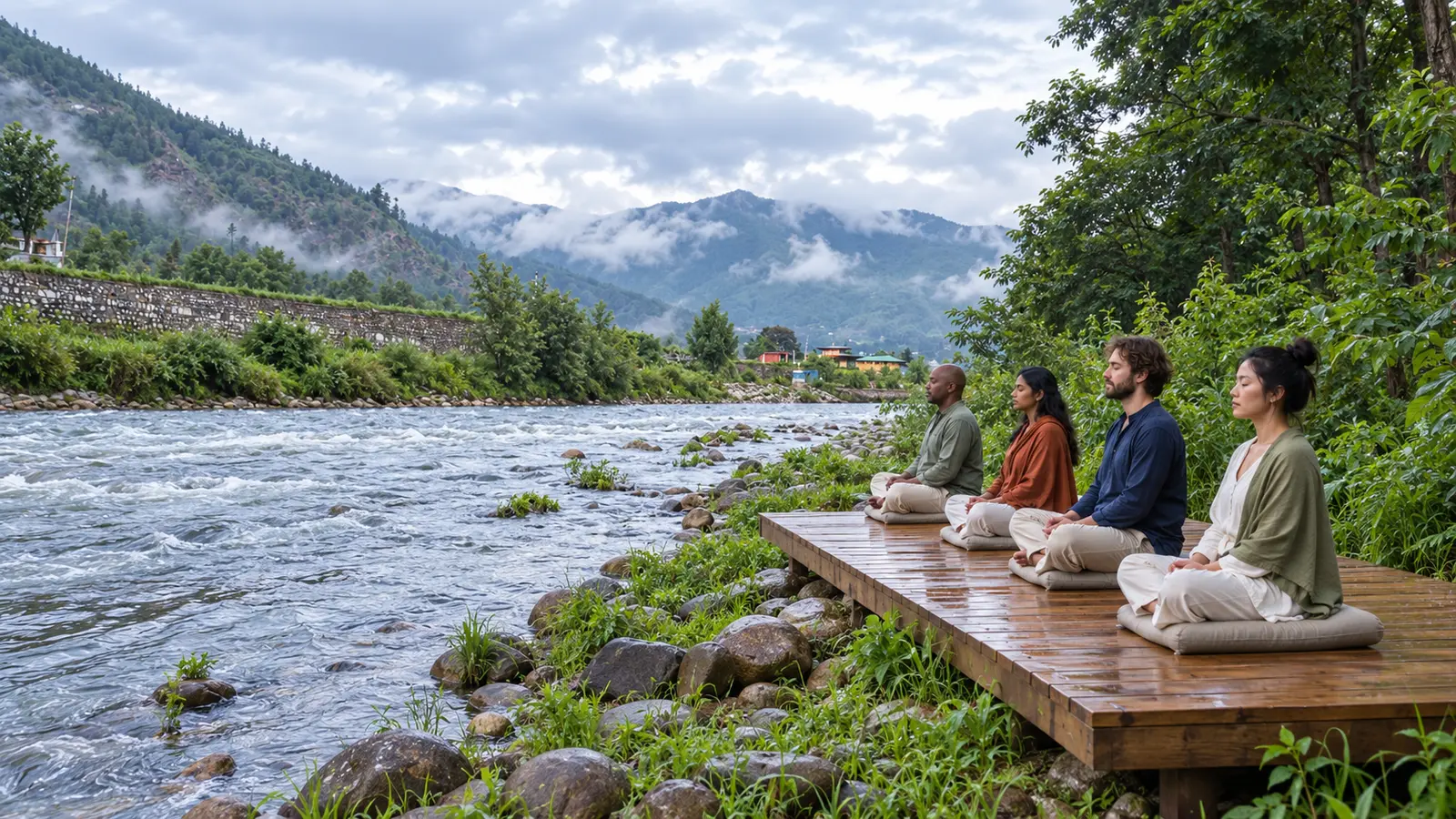
Silence has become surprisingly difficult to find. Bhutan's forested valleys, rivers and contemplative traditions offer a fitting environment in which to pause unnecessary noise and notice the present moment more clearly.
What is intentional silence?
Intentional silence means choosing to pause unnecessary conversation and digital stimulation for a defined period. It is different from being ignored, isolated or required to take a formal vow. Guests remain free to communicate practical needs, ask for assistance or leave an activity whenever necessary.
A guided quiet period might last for ten minutes, part of a morning or the duration of a walk or meal. It may involve drinking tea without checking a phone, listening to the river, writing privately in a journal or sitting outdoors without an agenda. The purpose is not to empty the mind or achieve a special state. It is simply to notice more clearly.
Bhutan's relationship with contemplative practice
Bhutan's spiritual landscape is closely connected with Vajrayana Buddhism. Monasteries, temples, prayer flags and traditional practices remain visible throughout the country.
Bhutan's official tourism authority describes meditation retreats as part of the country's spiritual life and notes that some devoted Buddhist practitioners undertake extended periods of meditation or vows of silence. It also describes mountains, rivers and forests as holding spiritual significance within Bhutanese culture.
Visitors should approach these traditions respectfully. A short period of quiet during a wellness programme is not equivalent to monastic practice, religious training or a traditional Buddhist retreat. It is a gentle invitation to attentive presence while recognising that Bhutanese contemplative traditions have meanings extending far beyond the visitor experience.
Why Paro is suited to mindful silence
Paro brings together pine-covered hillsides, cultivated fields, traditional architecture and the flowing Paro Chhu. Bhutan's Department of Tourism reports that more than 70% of the country is covered by woodland and presents meditation and wellbeing experiences alongside the country's wilderness, rural valleys and living traditions.
Here, silence does not mean an absence of sound. It may include moving water, birds, wind through trees or the everyday activity of a valley beginning its day. These sounds become part of the experience when conversation and digital distraction are temporarily reduced.
What a quiet morning may look like
A period of intentional silence begins with clear guidance. Guests may gather before breakfast, store their phones and proceed at their own comfortable pace. The experience might begin beside the river before moving into a gentle walk through an appropriate natural area.
Participants can notice the closest and most distant sounds, the temperature of the morning air, changes in colour and light, and the natural impulse to start a conversation or reach for a phone. There is no need to judge these reactions. Becoming aware of them is part of the practice.
The quiet period may conclude with journaling, a few natural breaths or optional group reflection. Guests can share what they noticed, but no one is required to describe a private experience.
Silent meals without restriction
Silence can also be introduced briefly during a meal. This does not mean that every retreat meal becomes formal or wordless; shared food and conversation remain valuable parts of hospitality and connection.
Guests might instead enjoy the first few minutes of breakfast quietly, noticing aroma, colour, temperature and texture before conversation begins. This complements our approach to mindful eating in Bhutan without imposing dietary rules. Guests always remain free to communicate allergies, dietary needs or anything affecting their comfort.
Silence and digital quiet
Phones can make even a peaceful place feel busy. An intentional-silence session becomes more meaningful when notifications, photography and messaging are paused. Devices remain available when needed for accessibility, essential family contact or another practical reason.
The aim is not to present technology as harmful. It is to experience the difference between recording a moment and being fully present within it. This flexible approach complements our Digital Detox guide without demanding complete disconnection.
What research can—and cannot—tell us
Research into meditation retreats suggests potential psychological benefits, but it should not be used to promise individual outcomes. A systematic review and meta-analysis involving 21 studies reported improvements across several psychological measures. The researchers also found considerable differences in programme type, duration, study design and measured outcomes, limiting how broadly the findings could be interpreted.
The US National Center for Complementary and Integrative Health similarly notes that meditation and mindfulness research is often difficult to compare and may sometimes be interpreted too optimistically. Some participants also report uncomfortable experiences. The Himalayan Reset therefore presents silence and mindfulness as optional wellbeing activities—not treatments for anxiety, depression, insomnia or any medical condition.
Silence should always remain supportive
Quiet can feel peaceful for one person and unfamiliar or uncomfortable for another. Participants can speak whenever they need assistance, choose a shorter quiet period, sit near a facilitator, use accessibility devices or leave an activity without embarrassment.
Anyone receiving medical or mental-health treatment should continue following their clinician's advice. Retreat activities never replace professional care.
Silence within the Seven Pillars
Silence is one of The Himalayan Reset's Seven Pillars, alongside Nature, Movement, Mind, Nutrition, Sleep and Purpose. A quiet riverside session connects Silence with Nature. Mindful movement builds awareness of the body, while journaling can help guests reflect on Purpose.
Silence is not offered as a separate or austere programme. It forms part of the wider rhythm of The Happiness Retreat, a premium seven-night Bhutan wellness retreat in Paro.
Taking a small quiet practice home
Silence does not require a Himalayan valley. Choose a safe, comfortable place, put the phone away for ten minutes and sit or walk without playing audio. Notice three sounds, allow thoughts to come and go naturally, then write down one observation.
The goal is not to create another task to perform perfectly. It is to protect a small amount of undivided time.
Discovering what becomes audible
Silence in Bhutan is not an escape from life. It is an opportunity to experience life with fewer interruptions. Beside a river, beneath forested slopes or during the first moments of morning, guests may begin to notice details normally hidden beneath conversation and digital noise.
Nothing needs to be achieved or forced. Sometimes a meaningful reset begins with simply becoming quiet enough to listen.
A responsible wellness note
The Himalayan Reset provides general wellbeing and personal-enrichment experiences. Silence, meditation and mindfulness activities do not diagnose, treat, cure or prevent medical conditions and are not substitutes for professional healthcare.
Sources and further reading
This original article was informed by the Bhutan Department of Tourism's wellness guidance, its official overview of Bhutan, a systematic review indexed by PubMed, and NCCIH guidance on meditation and mindfulness.