Some destinations help us escape our routine. A rare few encourage us to reconsider it. Bhutan belongs to the second category—a Himalayan kingdom where protected nature, living culture and a philosophy of balanced progress create an unusually meaningful setting for wellbeing.
1. Nature is not a backdrop—it is part of the experience
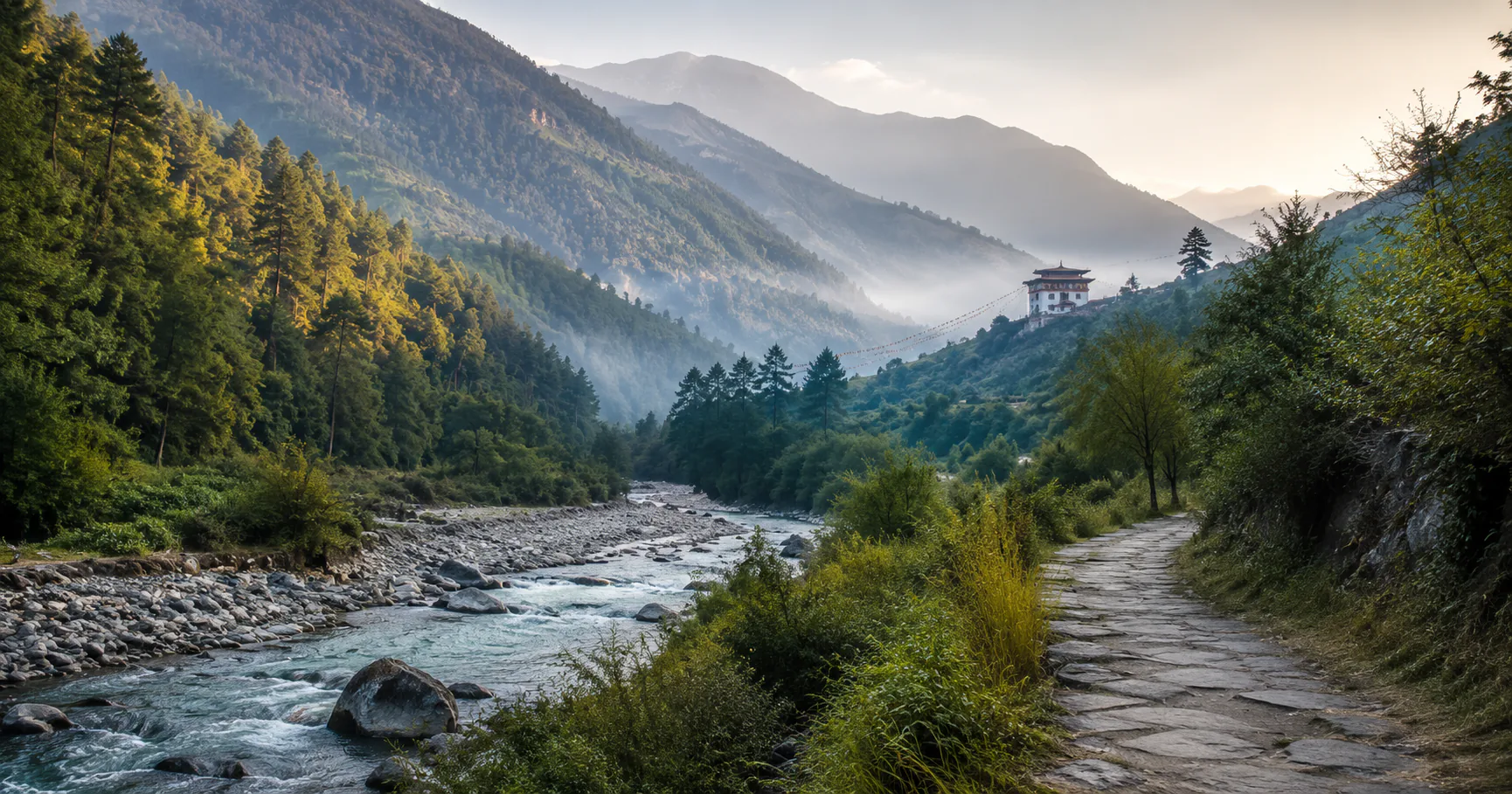
In Bhutan, forests, mountain valleys and rivers are not simply scenery viewed from a hotel window. They are closely connected with culture, daily life and national priorities. The country’s Constitution requires a minimum of 60% forest cover to be maintained for all time, reflecting a long-term commitment to environmental protection.
For a retreat guest, this environment offers something simple but increasingly scarce: space. Space to walk without rushing, breathe without checking a screen, sit beside flowing water and notice what the mind usually overlooks.
2. Bhutan places wellbeing within its idea of progress
Bhutan introduced the world to Gross National Happiness, an approach based on the belief that material and spiritual development should progress together. It does not mean that every citizen is always happy. Rather, it offers a broader question: what conditions allow people, communities, culture and nature to flourish together?
That question has natural relevance to a wellness retreat. Lasting wellbeing is rarely created by one treatment or one inspiring weekend. It grows from the relationship between how we move, eat, sleep, work, connect and make meaning.
3. The pace encourages attention
Modern travel can become another checklist—more places, more photographs and more activity compressed into less time. Bhutan’s tourism philosophy has historically favoured a more considered, higher-value form of travel that respects its environment and culture.
A retreat can follow the same principle. A slower morning, one attentive walk or an evening without constant notifications may be more restorative than a crowded schedule of “wellness activities.” The objective is not inactivity; it is participation with presence.
4. Paro creates a gentle transition
Paro is many visitors’ first encounter with Bhutan. The valley combines an international gateway with fields, wooded slopes, traditional architecture and a more spacious rhythm. For The Himalayan Reset, that makes it an appropriate place to arrive, settle and gradually step away from everyday demands.
Retreat days can move between guided practice and the surrounding landscape: gentle movement in the morning, mindful time near the river, nourishing meals, reflection and quieter evenings designed around rest.
5. Living traditions add depth—not decoration
Bhutan’s Buddhist heritage, sacred spaces, traditional arts and community customs remain part of contemporary life. A responsible retreat does not treat these traditions as props or promise instant spiritual transformation. It approaches them with curiosity, humility and guidance from appropriate local partners.
This distinction matters. Meaningful wellness travel should create respect for the host culture, not merely borrow its appearance.
6. Sustainability becomes personal
Bhutan’s official climate commitments describe a country determined to remain carbon neutral, supported by its extensive forests. For visitors, this national approach can make sustainability feel less like an abstract policy and more like a daily responsibility.
Travelling in smaller groups, respecting trails and sacred places, reducing waste, supporting local services and staying longer rather than rushing through are practical ways guests can participate in more responsible tourism.
7. Bhutan complements a complete view of wellbeing
The Himalayan Reset is built around seven connected pillars: Nature, Movement, Mind, Nutrition, Sleep, Silence and Purpose. Bhutan does not magically deliver these qualities, but its setting can support the conditions in which guests explore them.
Forest bathing and riverside meditation bring Nature and Mind together. Gentle yoga supports Movement. Thoughtful meals create attention around Nutrition. Quieter evenings make room for Sleep and Silence. Journaling and guided conversation invite reflection on Purpose.
8. The real retreat begins after the journey
The measure of a retreat is not how relaxed someone feels on the final morning. It is whether they return home with one or two realistic practices that continue to serve them—a calmer start to the day, more thoughtful boundaries with technology, regular time outdoors or renewed attention to sleep.
Bhutan offers a powerful setting for remembering these priorities. The lasting work, however, belongs to the guest.
A thoughtful wellness promise
The Himalayan Reset is a supportive wellness and travel experience, not a medical treatment programme. We do not promise cures or guaranteed outcomes. Guests with significant health conditions should consult their medical professional before travelling and continue prescribed care.
Sources and further reading
This original article was informed by official information from Bhutan Tourism on Gross National Happiness, the Royal Bhutanese Embassy on environment and forest protection, and Bhutan’s Ministry of Energy and Natural Resources on its carbon-neutral commitment.